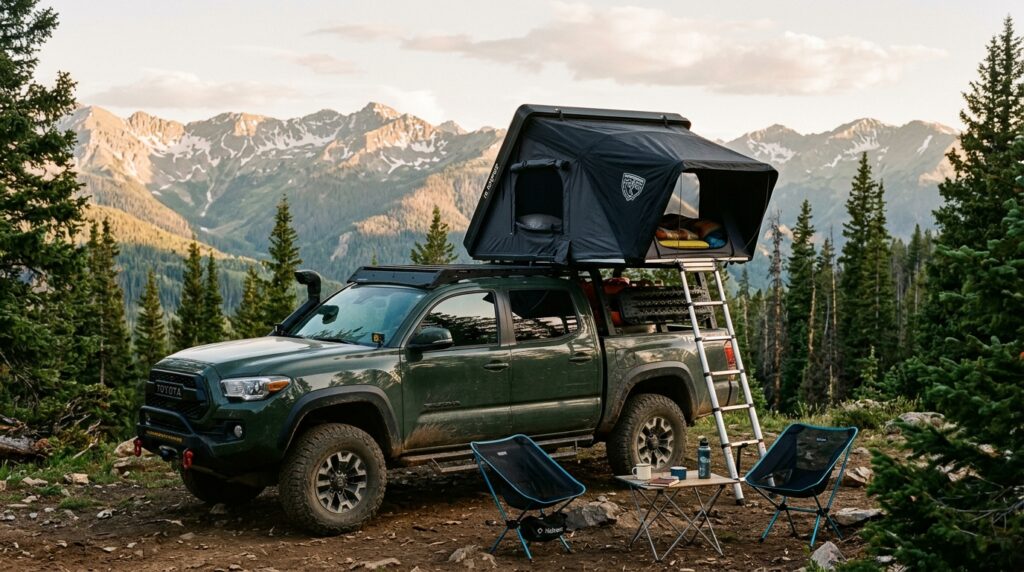
Critical Overlanding Engineering Check
Will Your Vehicle Safely Hold a $2,500+ Rooftop Tent? (Dynamic vs. Static Load Guide)
The number one mistake buyers make is assuming their vehicle’s roof will collapse under campers. You must understand the crucial difference between Dynamic Roof Capacity (in motion on trails) and Static Weight Capacity (camped parked):
🚗 Dynamic Weight Capacity (DWC)
What it means: The maximum weight your vehicle’s crossbars and roof can safely carry while driving at highway speeds or on rugged off-road corrugations.
⛺ Static Weight Capacity (SWC)
What it means: The weight your vehicle’s structural pillars hold when fully stationary/parked with people inside sleeping.
Disclosure: The Camper Conner is reader-supported. When you buy through links on our site, we may earn an affiliate commission at no extra cost to you.
Rooftop tents (RTTs) have revolutionized off-grid overlanding and truck camping by lifting your sleeping quarters off rocky, uneven terrain, mud, and prowling wildlife while offering a built-in mattress that sets up in under two minutes. For serious backcountry explorers, Off Road Tents is North America’s premier specialized dealer, curating proven expedition-grade brands like Guana Equipment, iKamper, OVS, and Front Runner. In our 2026 field evaluations across Utah desert washes and Colorado alpine passes, premium aluminum hard-shell models delivered unmatched 45-second setup times and superior wind deflection, while rugged soft-shell annex models offered unbeatable living space for multi-week family expeditions.
Top Pick at a Glance: Hard Shell vs. Soft Shell
The Verdict: If you value rapid 60-second setup and highway fuel efficiency, choose an aluminum hard-shell rooftop tent. If you need maximum interior sleeping footprint and an enclosed ground-level annex room for changing clothes or pets, a fold-out soft-shell tent offers superior space per dollar.
- Best Hard Shell for Speed: Hard-shell clamshells pop open instantly on gas struts, keeping bedding pre-made inside.
- Best Soft Shell for Space: Fold-out models provide a true king-size sleeping footprint that cantilevers beyond your truck bed.
- Direct Authorized Dealer: Free shipping, verified warranty, and price-matching on all models at Off Road Tents.
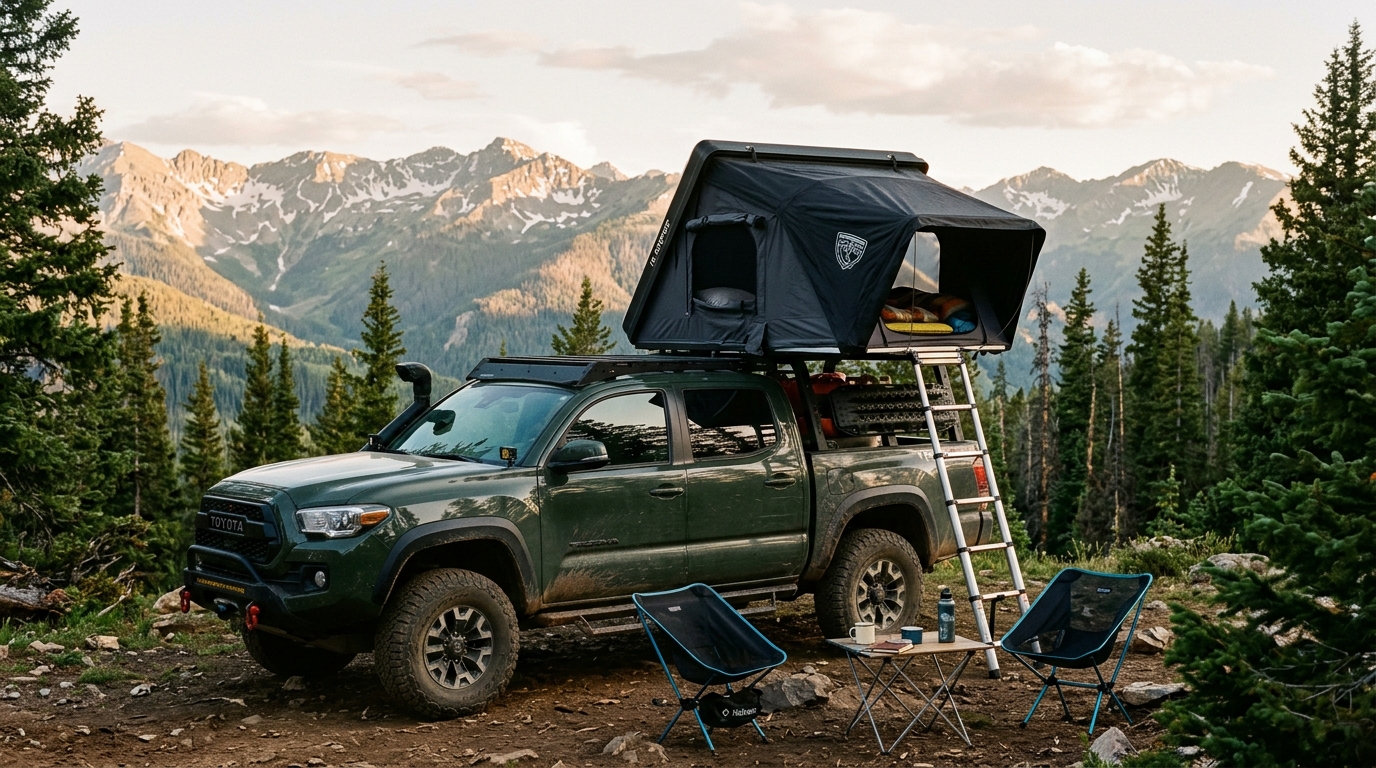
Top Overlanding Rooftop Tents Compared
| Tent Model | Design Type | Sleeping Capacity | Setup Speed | Weight | Best For |
|---|---|---|---|---|---|
| Guana Equipment Wanaka 55 | Soft Shell with Annex | 3-4 Persons | 3-5 Minutes | 140 lbs | Family camping & extended stays |
| iKamper Skycamp 3.0 | Hybrid Hard Shell | 4 Persons | 60 Seconds | 165 lbs | Top-tier luxury & rapid transit |
| OVS Nomadic 3 Extended | Soft Shell Overland | 3 Persons | 4 Minutes | 150 lbs | Heavy-duty 4-season budget value |
| Alu-Cab Expedition 3.R | Aluminum Clamshell | 2 Persons | 30 Seconds | 172 lbs | Extreme hardcore overlanding |
Interactive Rooftop Tent Dynamic & Static Roof-Load Safety Checker
Enter your roof rack’s rated Dynamic Load Limit (while driving) plus tent and sleeper weights to verify safe overlanding compatibility before ordering.
Why Source Your RTT From Off Road Tents?
Buying a rooftop tent is a major long-term commitment. Unlike unverified third-party marketplaces, Off Road Tents is an American-based authorized distributor specializing exclusively in vehicle-supported expedition gear. Every tent purchased through their platform includes:
- Direct Manufacturer Warranties: Full coverage on aluminum extrusions, gas struts, and heavy-duty ripstop canvas fabrics.
- Free Freight Shipping to Lower 48 States: RTTs ship via commercial LTL freight trucks with liftgate delivery directly to your home or shop.
- Expert Rack Compatibility Advice: Real overland specialists review your specific vehicle make, bed rack, or crossbar static/dynamic load ratings before you install.
Hard Shell vs. Soft Shell: Which Architecture Suits You?
1. Hard Shell Rooftop Tents: The Speed & Aerodynamic Champions
Hard-shell tents feature an aluminum, fiberglass, or ABS composite top shell that unlatches and pops open via hydraulic gas struts in 30 to 60 seconds. Because the shell closes flush against the vehicle roofline:
- Aerodynamics: Minimal wind resistance and negligible MPG penalties at 75 mph highway speeds.
- Storm Rigidity: Clamshell profiles slice through high-altitude winds without noisy fabric flapping.
- Pre-Made Bedding: You can leave pillows, down sleeping bags, and sheets locked inside when closed.
2. Soft Shell Rooftop Tents: The Spacious Family Basecamp
Soft-shell tents fold out over the side or rear of your vehicle, doubling their interior floor area once deployed. They are legendary for:
- Massive Footprint: Models like the Guana Equipment Wanaka easily accommodate 3 to 4 adults.
- Ground-Level Annex Enclosures: Provide a fully private room at the base of the ladder for camp kitchens, showers, or pet sleeping quarters.
- Value per Square Foot: Lower entry cost per square foot of sleeping real estate.
Critical Technical Factors Before You Order
1. Dynamic vs. Static Roof Rack Ratings
This is the number one misconception among first-time RTT buyers:
- Dynamic Weight Capacity: The maximum weight your vehicle’s roof rack or bed rack can safely support while driving at highway speeds. Most quality RTTs weigh between 120 and 175 lbs. Your crossbars must have a minimum dynamic rating of at least 165 lbs.
- Static Weight Capacity: The weight your rack can support when parked stationary at camp. Static capacity is typically 3x to 5x higher (usually 600 to 900+ lbs), easily supporting the tent plus 2 to 3 sleeping adults.
2. Anti-Condensation Mats & Thermal Insulation
💡 Essential Camp Comfort Gear: Ultralight Air Pumps & Lanterns
Don't spend 20 minutes manually blowing up rooftop tent air mattresses, sleeping pads, or packrafts after a grueling day on the trail. Check out the pocket-sized FLEXTAIL Ultralight Air Pumps & Outdoor Gear (featuring the Zero Pump and Tiny Pump 2X with built-in 3-mode camp lantern & rapid vacuum deflator).
Warm human breath hitting cold aluminum floorboards creates underside mattress condensation during cold mountain nights. Premium tents sold by Off Road Tents include 3D spacer mesh anti-condensation mats beneath the mattress, ensuring continuous airflow and keeping foam bedding bone-dry.
Mistakes to Avoid When Overlanding With a Rooftop Tent
- Mounting on Factory OEM Crossbars: Most stock plastic-capped SUV crossbars only hold 100 lbs dynamic load. Always upgrade to heavy-duty steel or extruded aluminum overland bars (such as Front Runner, Yakima HD, or bed rack towers).
- Packing Away a Soaked Tent Long-Term: While ripstop polyester-cotton canvas handles monsoons effortlessly, folding a soaking-wet tent closed for more than 48 hours will cause mold. Always pop the tent open to air out once you return home.
- Ignoring Vehicle Leveling at Camp: Sleeping at an incline leads to headaches and rolling into tent corners. Carry a pair of plastic RV leveling ramps to park your tires level on uneven BLM wilderness terrain.
Frequently Asked Questions
Can any vehicle or truck support a rooftop tent?
Almost any SUV, crossover, pickup truck, or wagon can carry a rooftop tent provided you have an aftermarket roof rack or bed rack system rated for the tent’s dynamic weight (minimum 150 lbs dynamic capacity). Small sedans with bare roofs without fixed mounting points are generally not recommended.
Do rooftop tents affect gas mileage?
Yes. Low-profile hard-shell tents (under 10 inches tall) typically only drop fuel efficiency by 0.5 to 1.5 MPG. Bulkier soft-shell tents with PVC travel covers create slightly more drag and can reduce fuel efficiency by 1.5 to 3.0 MPG depending on vehicle aerodynamics and speed.
Final Take: The Ultimate Camping Upgrade
If you spend more than a dozen nights a year exploring public lands, an expedition-grade rooftop tent pays for itself in comfort, security, and effortless camp transitions.
Public Land Overlanding Rules & Related Guides:
- Before pitching your rooftop tent on federal public lands, check current dispersed camping rules on the Bureau of Land Management (BLM) Camping Guide.
- Planning your next truck camping route? Read our Moab Public Land Camping Guide and Best Campgrounds in Colorado Rockies.
Related Camper Conner Field Guides & Official Resources: